
There’s a moment, somewhere between the opening ceremony and the final whistle, when hospitality stops being a perk and starts being a proposition. For elite brands operating at the highest levels of global sport and entertainment, that moment is everything because the difference between a memorable experience and a measurable one comes down to what’s running beneath it.
The problem with “premium”
The word premium does a lot of heavy lifting in the events industry. Premium access. Premium experience. Premium hospitality. But premium, on its own, doesn’t scale. And it certainly doesn’t protect margin.
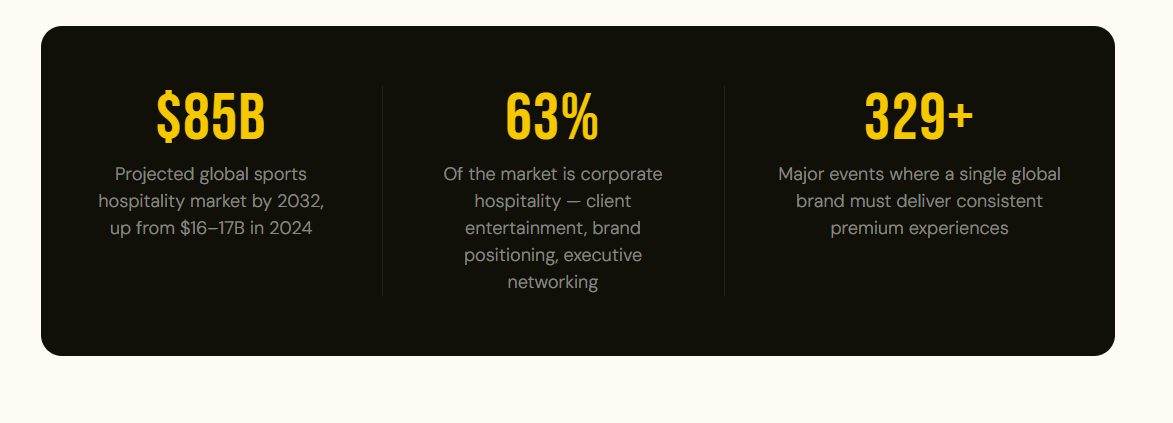
The numbers tell the story. When a global brand commits to hospitality across dozens of events, in multiple territories, for thousands of guests each with their own requirements, entitlements, and expectations, the complexity compounds fast.
A beautifully curated experience for 50 people in one city is a triumph. The same standard, replicated across 329+ major events, for 20,000+ configured packages? That’s a logistics operation masquerading as a luxury product.
The package as a commercial instrument

Industry analysis shows that bundled hospitality packages grew by roughly 45% globally in 2024 compared to 2022. When structured correctly, a package does several things simultaneously.
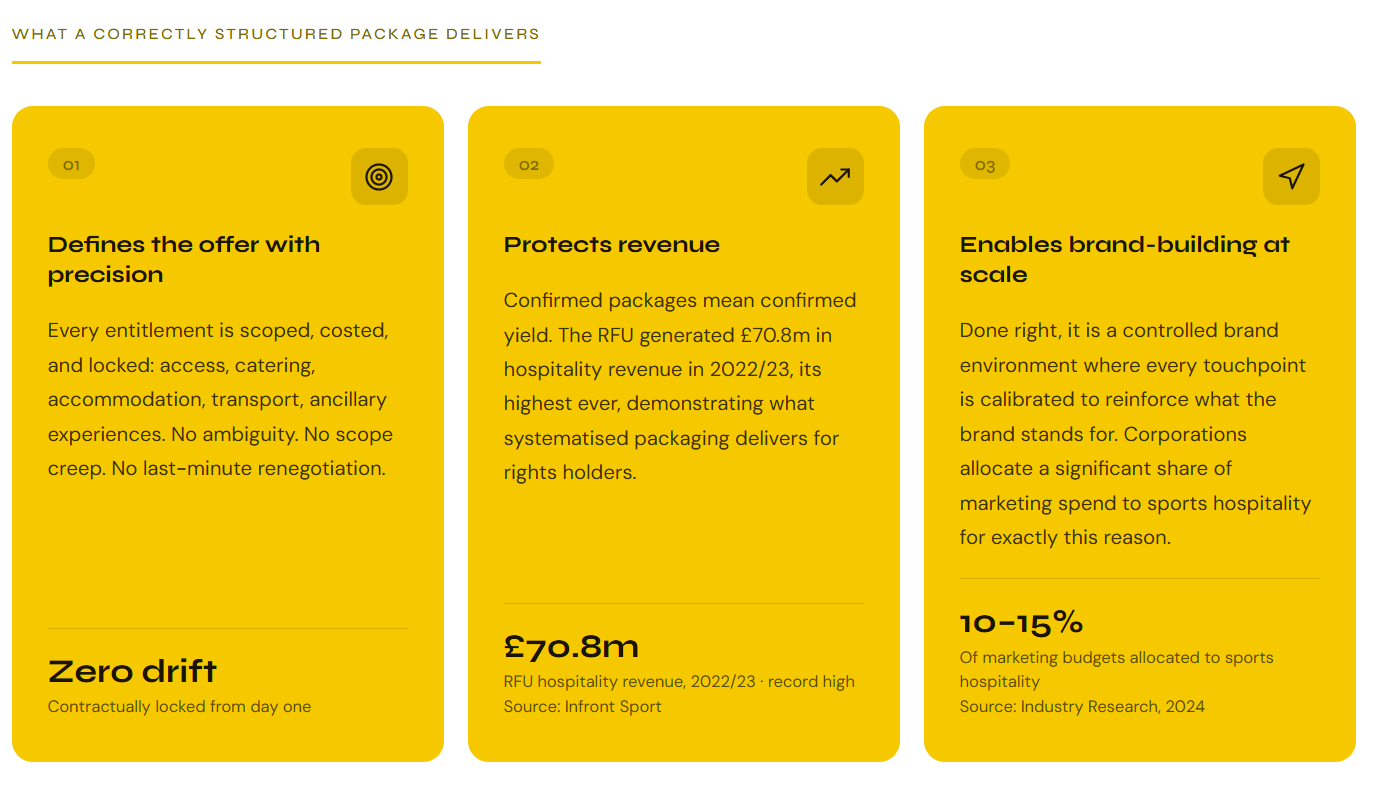
The Olympics is the clearest example of this dynamic. The LA28 Games with hospitality packages already on sale – years in advance, demonstrates how the world’s largest events operate on timelines that make improvisation commercially catastrophic.
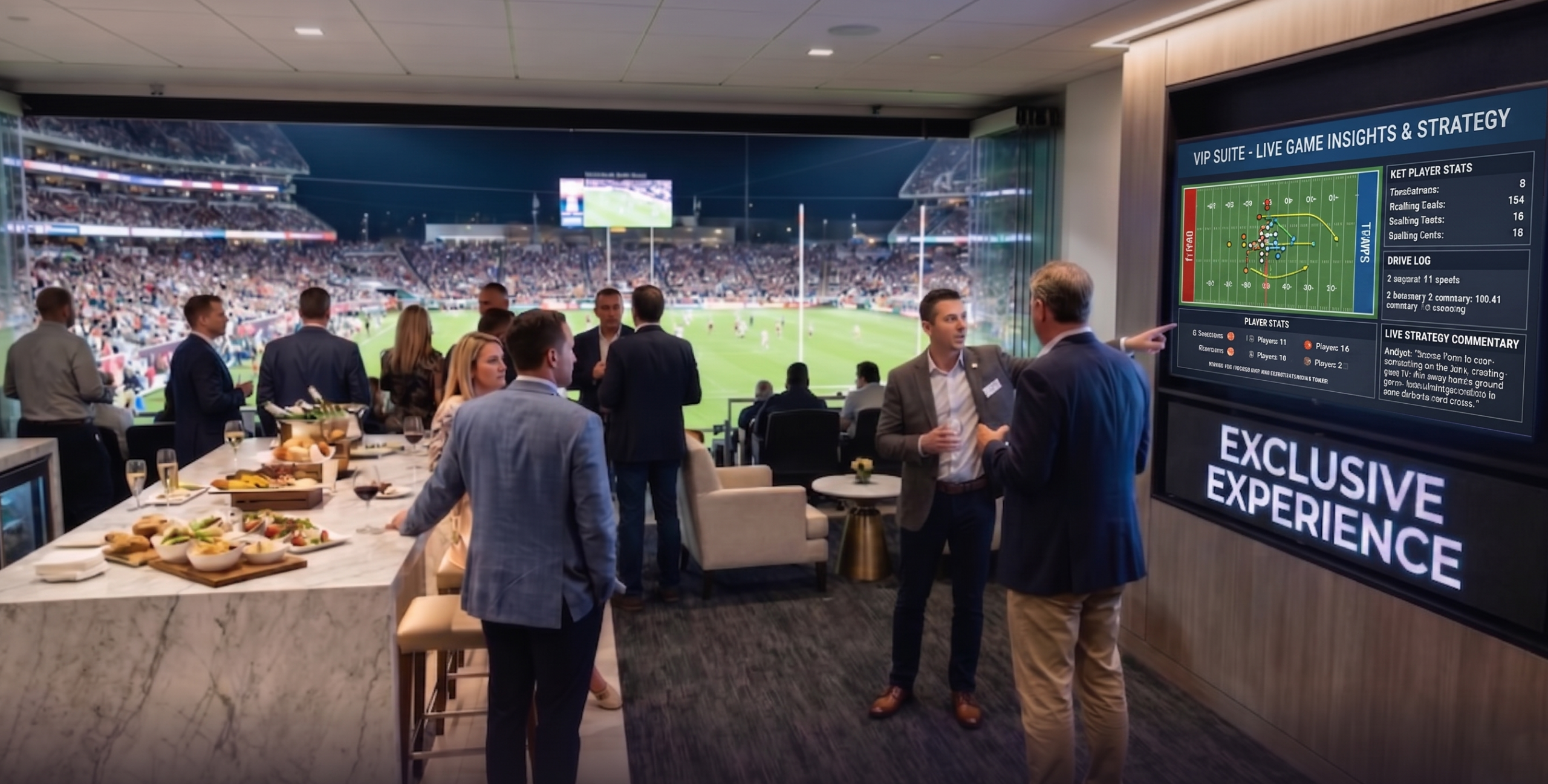
Why scale breaks most models
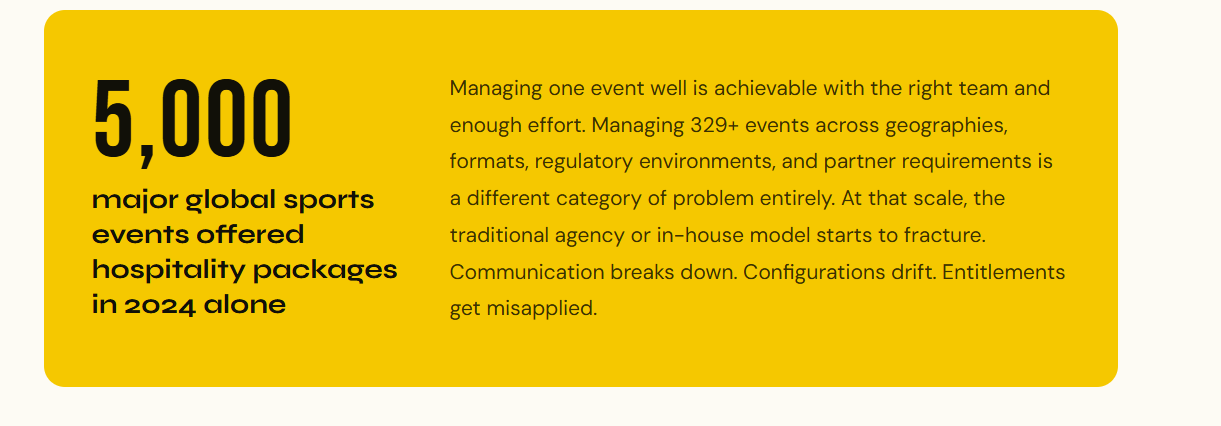
At that scale, the guest experience becomes inconsistent. And inconsistency, in a premium hospitality context, is brand damage. Common missteps include “over-customization which drains resources and makes delivery harder to replicate across events” and “data gaps that fail to capture valuable insights.”
What’s needed is a unified engine: a single system that can hold the complexity of 20,000+ configured packages without losing fidelity on any individual one. When those three layers are disconnected as they almost always are in legacy models – you get friction, error, and margin erosion. When they’re unified, you get something rare: predictable hospitality at scale.
What commercial certainty actually looks like
For a CFO or CMO evaluating their events investment, commercial certainty means being able to answer three questions with confidence. Without clear upfront objectives and measurement frameworks, hospitality spend risks being treated as a discretionary cost rather than a strategic revenue driver.
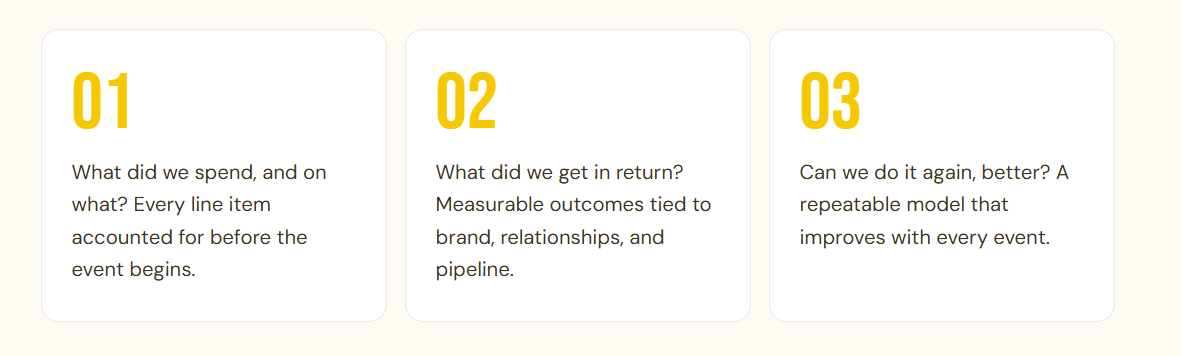
Most organizations can answer one of these questions. Fewer can answer two. Almost none can answer all three, consistently, across hundreds of events simultaneously. That’s the gap that a unified hospitality engine closes.
The quiet competitive advantage
Here’s what’s often missed in the conversation about global hospitality: the brands that do this well don’t just deliver better experiences. They build a structural advantage over competitors who are still solving logistics one event at a time.
With VIP suite demand rising with approximately 38% in 2024 compared to 2022 and over 200 million people travelling for sports events globally in 2023, the window for competitive differentiation is wide open, but only for those with the infrastructure to move at scale.
When your hospitality operation is systematized – when your packages are configured, your costs are locked, and your delivery is repeatable – you can move faster, commit earlier, and negotiate harder. You can take on more events without proportionally increasing overhead. And you can protect the thing that matters most in any premium context: consistency of experience, regardless of scale.
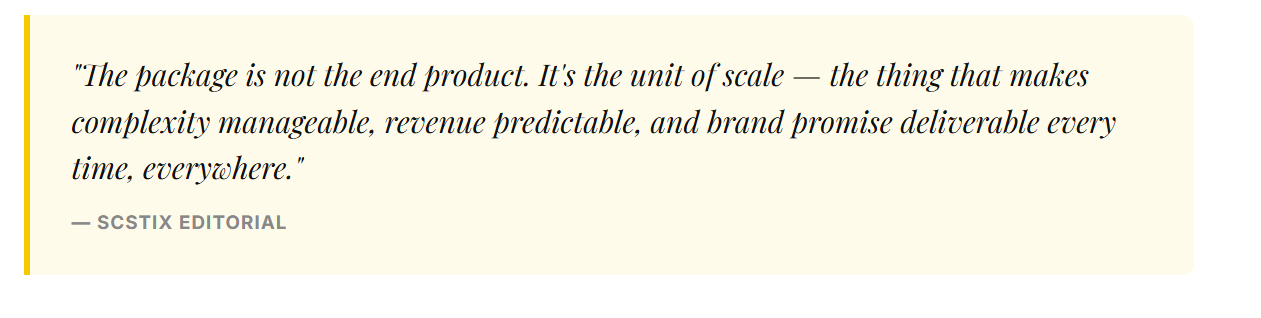
The experience is what guests remember. The package is what makes it possible.

See how SCStix is built for the complexity that you are currently handling – https://scstix.com/